Reading Korean Street Signs: What the Words on Seoul's Buildings Mean
Written and reviewed by Jun and Jin, native Korean speakers
Published · How we write & review
After this page, you can read the most common words on Korean shop signs — what the business is, which floor it's on, and whether a space is for rent.
10-second answer
The short answer
Korean shop signs repeat a small set of words. Learn about a dozen — 노래 (norae, karaoke), 치과 (chigwa, dentist), 학원 (hagwon, private academy), 부동산 (budongsan, real estate agent), 생맥주 (saengmaekju, draft beer), 전문점 (jeonmunjeom, specialist), 임대 (imdae, for lease) — plus the floor markers 층 (cheung), F and B1, and most of a Seoul street becomes readable.
Quick check — did that land?
1. A sign says 치과 7F. What is it?
Why Korean Streets Look Like This
Walk down any busy street in Seoul and the buildings are covered in signs — vertical banners down the corners, boxes on every floor, stand-up signs on the pavement. The reason is simple: shops, clinics and bars don't only take the ground floor. A single building can hold a restaurant at street level, a dentist on the 7th floor and a karaoke room in the basement, and every one of them wants to be seen from the street.
The good news for learners is that the words on those signs repeat. Once you know what kind of business each word means and how floors are written, a wall of signs turns into a building directory you can read. If Hangul itself is still slow for you, start with the alphabet — signs are excellent practice, because the words are short and the letters are big.
See also: Korean Alphabet (Hangul) for Beginners
One Side Street, Decoded
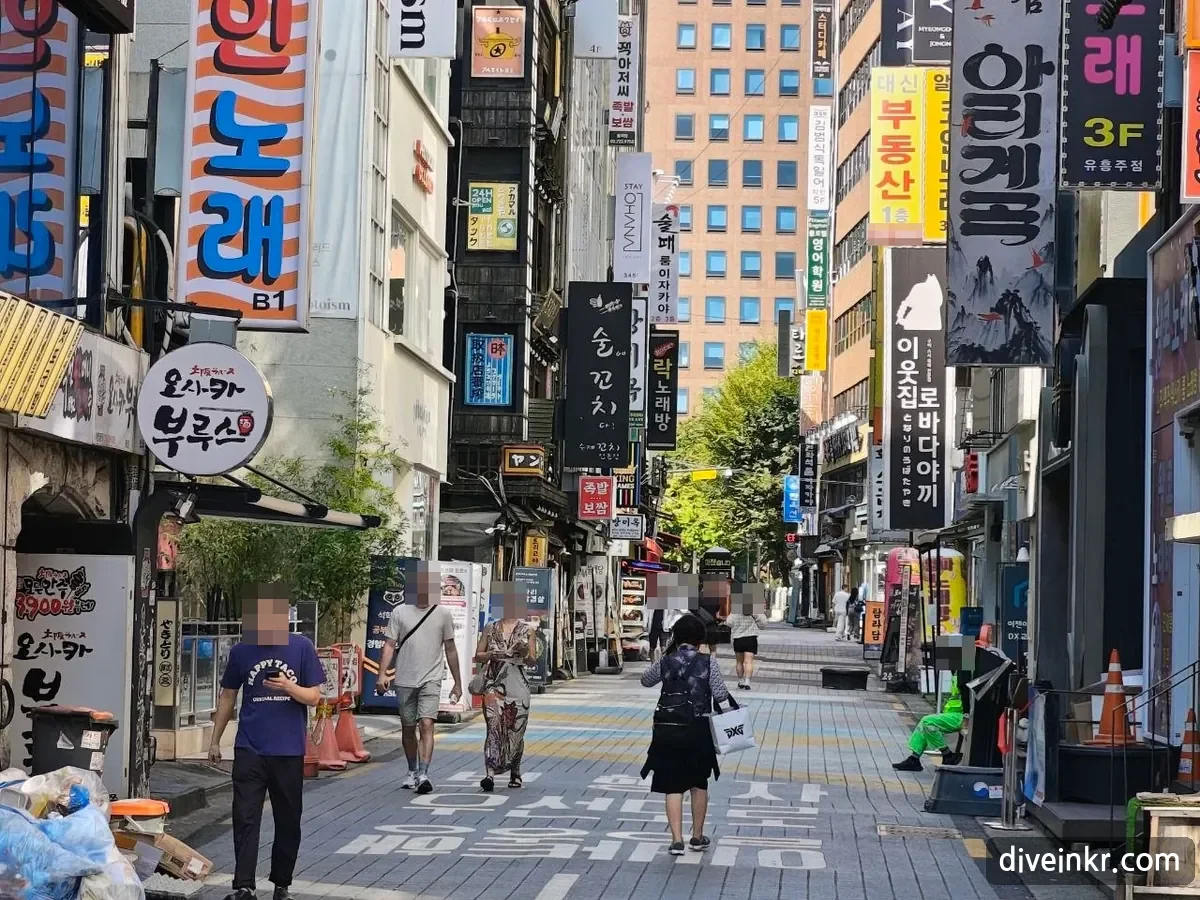
| On the sign | Read as | What it tells you |
|---|---|---|
| 노래 · 노래방 | norae · noraebang | Karaoke. 노래 means "song"; on its own on a sign it's short for 노래방, a karaoke room rented by the hour |
| 족발 · 보쌈 | jokbal · bossam | Braised pig's trotters and boiled pork wraps — a restaurant that's also a classic place for anju |
| 이자카야 | ijakaya | A Japanese-style pub — the Japanese word written in Hangul |
| 부동산 | budongsan | A real estate agency. People come here to rent an apartment or an office |
| 학원 · 영어학원 | hagwon · yeongeo-hagwon | A private academy; 영어학원 teaches English. Korean students often take classes at 학원 after school |
| 1층 · 3F · B1 | il-cheung · sam-cheung · jiha il-cheung | Which floor the business is on (see below) |
Not every 노래 sign is a 노래방
A 노래방 (also written 노래연습장) is a karaoke room you rent with friends, family or coworkers. A sign that adds 주점 (bar) is something else. 노래주점 and 단란주점 are bars where you drink and can also sing; under Korean law only a 유흥주점, as on one sign in this street, may employ hostesses. Both kinds are priced very differently from a 노래방. If you just want to sing, look for 노래방 or 노래연습장.
Seven Floors of Signs: Reading 층, F and B1
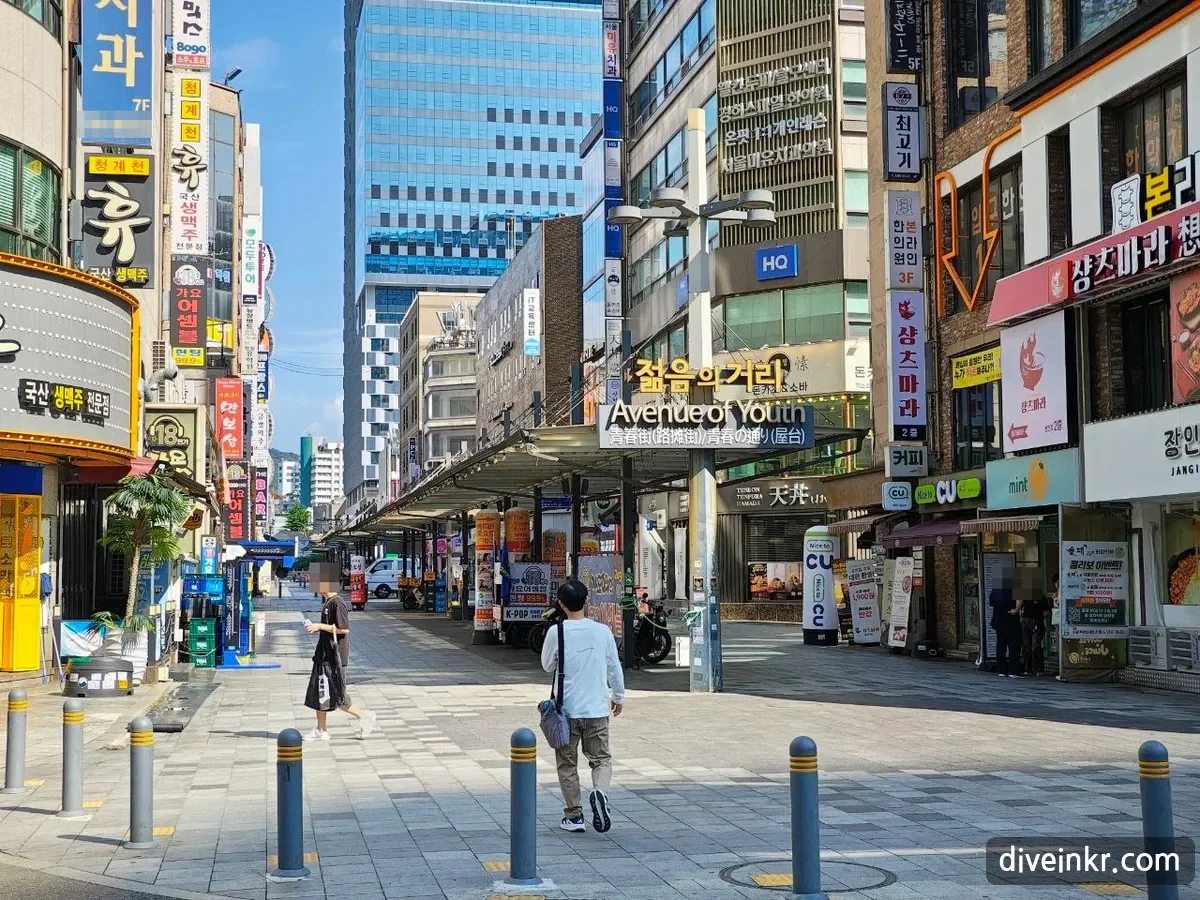
Floors are written two ways: with the Korean counter 층 (1층, 2층, 3층) or with an English F (3F, 7F). Both are read the same, with Sino-Korean numbers: 3층 is 삼층 (sam-cheung), 7층 is 칠층 (chil-cheung). Basements are 지하 ("underground"), so B1 is 지하 1층 (jiha il-cheung). As in the US, 1층 is the ground floor — the one you walk into from the street.
| On the sign | Read as | Meaning |
|---|---|---|
| 치과 | chigwa | Dentist |
| 생맥주 | saengmaekju | Draft beer (literally "fresh beer") |
| 전문점 | jeonmunjeom | "Specialist shop" — 생맥주 전문점 is a bar that specializes in draft beer |
| 국산 | guksan | Domestic, made in Korea — 국산 생맥주 is Korean draft beer |
| 커피 | keopi | Coffee — a café |
치과는 7층에 있어요.
chigwaneun chil-cheunge isseoyo.
The dentist is on the 7th floor.
노래방이 지하에 있어요?
noraebang-i jihae isseoyo?
Is the karaoke room in the basement?
The Avenue of Youth is one stop on our walk through Jongno, along with Bosingak and Cheonggyecheon.
임대 and 문의: The Signs on Empty Spaces
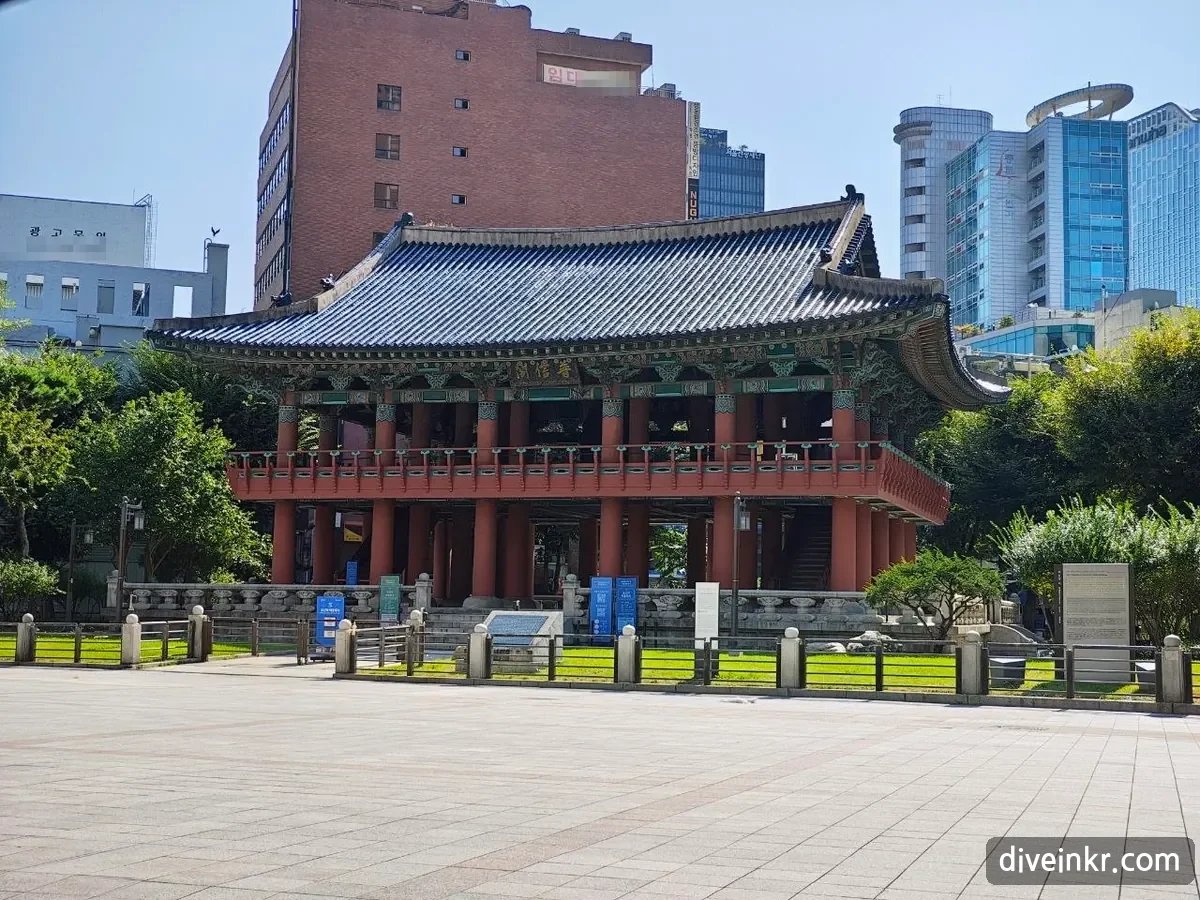
Two words show up on empty shops and offices all over Korea. 임대 (imdae) means "for lease" — the space is available to rent, and the phone number next to it is the one to call. 문의 (munui) means "inquiries," and it attaches to whatever the inquiry is about: 광고문의 (advertising inquiries), 임대문의 (leasing inquiries), 상담문의 (consultation inquiries). When you see 문의 followed by a number, it's an invitation to call.
Myeongdong: When the Signs Switch to 藥 and 眼鏡
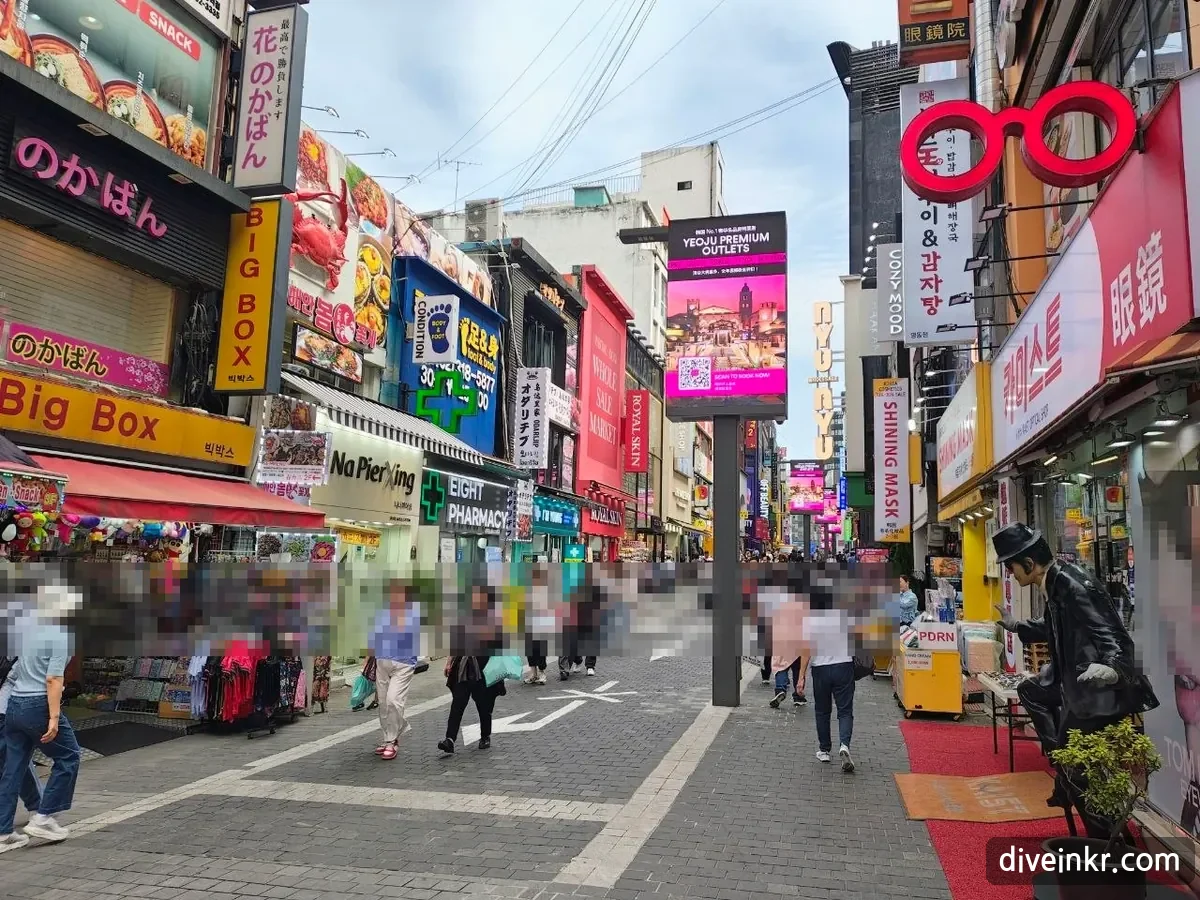
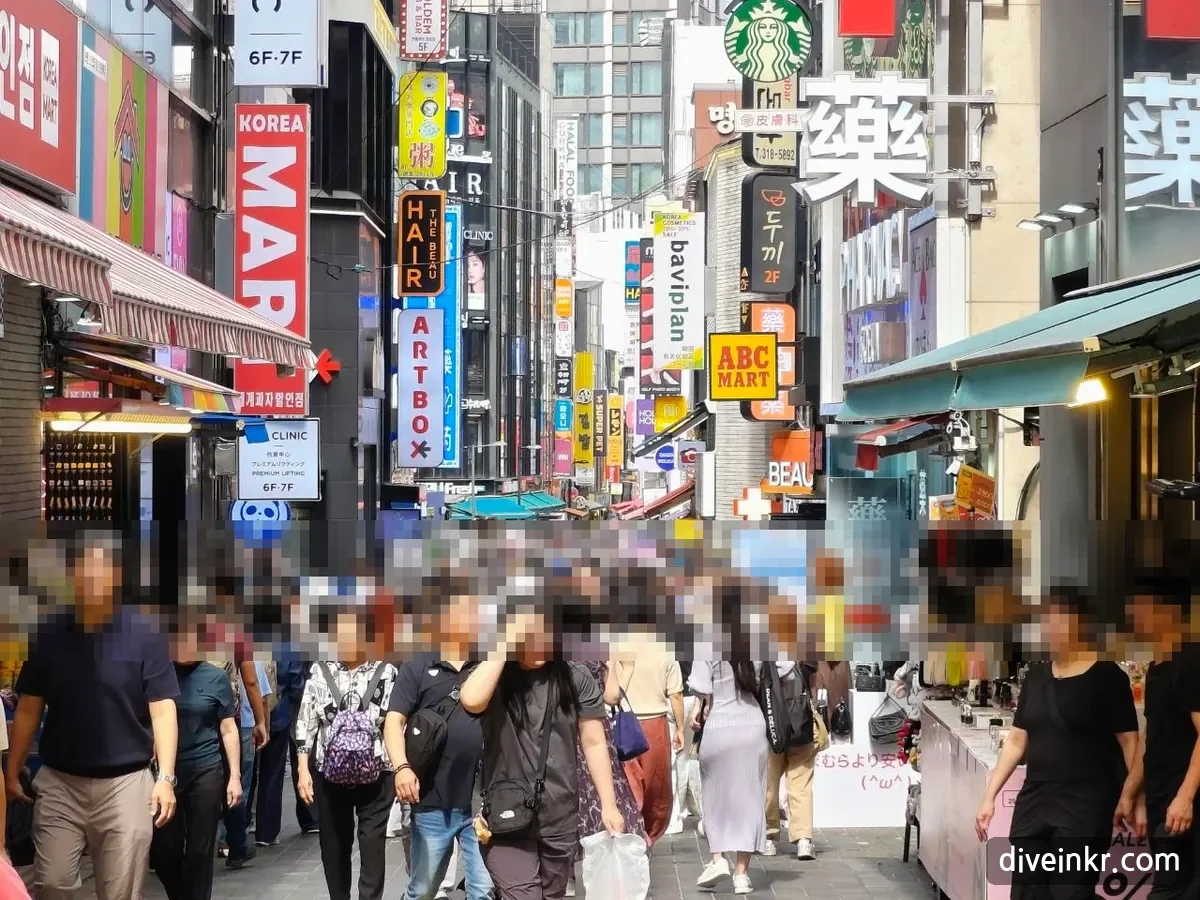
In Myeongdong, Seoul's busiest shopping district for tourists, the signs change. Many shops write for visitors from China and Japan, so you'll see Chinese characters and Japanese next to — or instead of — Hangul. The good news: many of those characters are 한자 (hanja), the Chinese characters that Korean words are built from, and each one has a Korean reading you already half know.
| On the sign | Korean reading | What it is |
|---|---|---|
| 藥 | 약 (yak) | Medicine — a pharmacy. In Korean the full word is 약국 (yakguk) |
| 眼鏡 | 안경 (angyeong) | Glasses — an optician, 안경점 |
| 皮膚科 | 피부과 (pibugwa) | Dermatology clinic |
| TAX FREE | 택스 프리 | The shop offers tax refunds for foreign visitors |
| 6F · 7F | 육 층 · 칠 층 | The business is on the 6th and 7th floors |
So 藥 on a Myeongdong sign and 약국 on a sign in a quiet neighborhood mean the same place. If you need one, the hospital and pharmacy phrases will get you through the counter — and a pharmacist in Myeongdong is more likely than most to answer in English, Chinese or Japanese.
CU, GS25, 올리브영: Brand Names Read the Korean Way
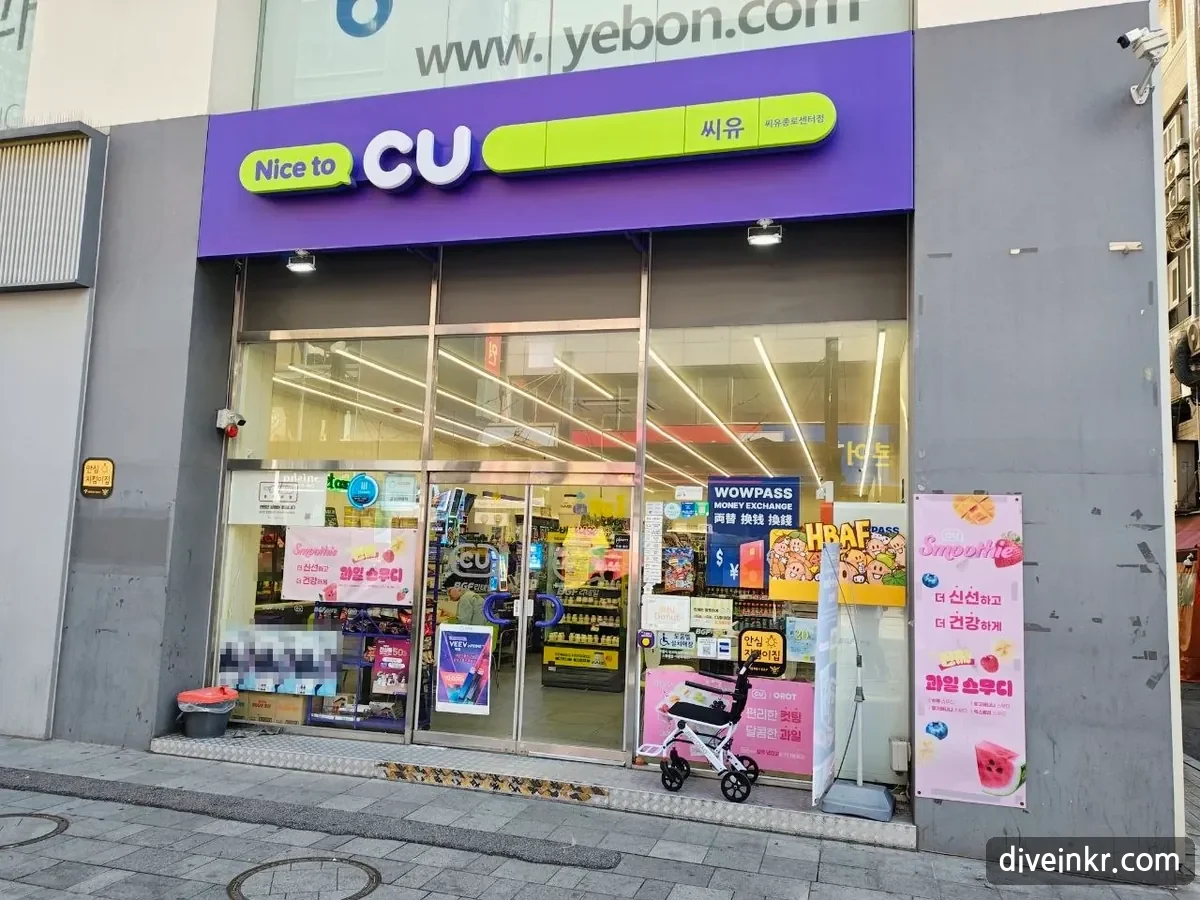
Many chain stores use English letters on their signs, but Koreans read the letters the Korean way. The convenience store chain CU — visible on the right of the Avenue of Youth photo — is 씨유 (ssiyu), and GS25 is 지에스 이십오 (jieseu isibo), with the number read in Sino-Korean. It matters when you ask for directions, because "see-you" said the English way may not be understood right away:
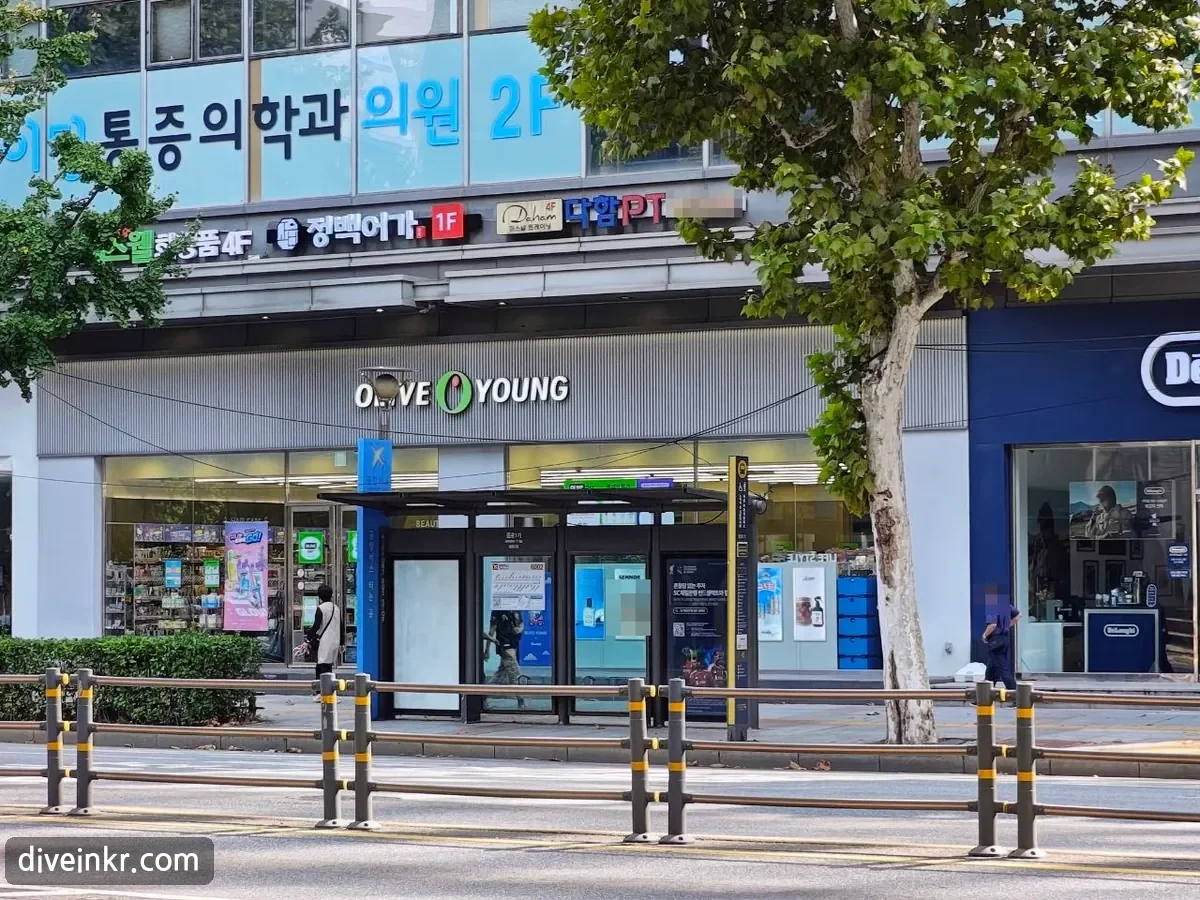
올리브영 is the one almost every visitor ends up in. It's CJ's health-and-beauty chain — skincare, makeup, vitamins, snacks — with about 1,370 stores in Korea as of early 2026, and foreign shoppers spent more than 1 trillion won there by August 2026. The name is read the English way in Korean sounds: 올리브영 (ollibeu-yeong). Notice the 의원 on the second floor: that's a doctor's clinic — 의원 and 병원 are the words to look for when you need a doctor.
이 근처에 씨유 있어요?
i geuncheoe ssiyu isseoyo?
Is there a CU around here?
편의점 어디 있어요?
pyeonuijeom eodi isseoyo?
Where's a convenience store?
편의점 works for any brand. Once you're inside, see convenience store Korean.
If you're looking for a place and only have its name, the directions phrases work the same way: say the name the Korean way, then 어디 있어요?
For more signs in context, take our photo walk through Gwanghwamun Square.
Common Mistakes
Mistake #1 — Reading 3F as the third floor above the ground floor
In Korea, 1층 is the ground floor, so 3F is two flights up — like in the US, not like in the UK or much of Europe.
Mistake #2 — Assuming any 노래 sign means karaoke with friends
노래방 and 노래연습장 are for singing. 노래주점, 단란주점 and 유흥주점 are bars with a very different price tag.
Mini Quiz
2. How do you read B1 on a Korean sign?
3. What does 임대 on a building banner mean?
4. How do Koreans usually say the convenience store name CU?
Related Knowledge
Learn Next
How to Ask for Directions in Korean
Once you can read the signs, the next step is asking where a place is — and understanding the answer.
Will you remember this tomorrow?
Save it — your daily review brings it back right before you'd forget. No account needed.