Korean: This vs That
The comparisons learners actually search for — two confusing things, side by side, with the intuition that separates them.
Textbooks usually explain each word alone, which is exactly why pairs like 은/는 and 이/가 stay confusing — the difference only makes sense side by side. Each comparison below picks one specific pair you've probably already mixed up and shows the actual test native speakers use to choose between them.
23 pages · 21 with a short video · 2 with our own photos or handwriting
Most read by learners
All 23 pages
안 vs 못: Two Ways to Say 'Not' in Korean
An (안) and mot (못) both negate a verb in Korean — 안 means 'don't/won't' by choice, while 못 means 'can't' due to inability.
▶ Short video
안녕히 가세요 vs 안녕히 계세요: The Goodbye Pair
Learn the difference between 안녕히 가세요 and 안녕히 계세요 — Korean's two polite goodbyes — and which one to say based on who's leaving.
▶ Short video
반말 vs 존댓말: Casual vs Polite Korean Speech
Learn the difference between 반말 (casual speech) and 존댓말 (polite speech) in Korean — who uses which, how to switch, and the biggest mistakes learners make.
▶ Short video
에 vs 에서: What's the Difference in Korean?
에 (e) and 에서 (eseo) both relate to place in Korean, but one marks destination/existence and the other marks where an action happens.
▶ Short video
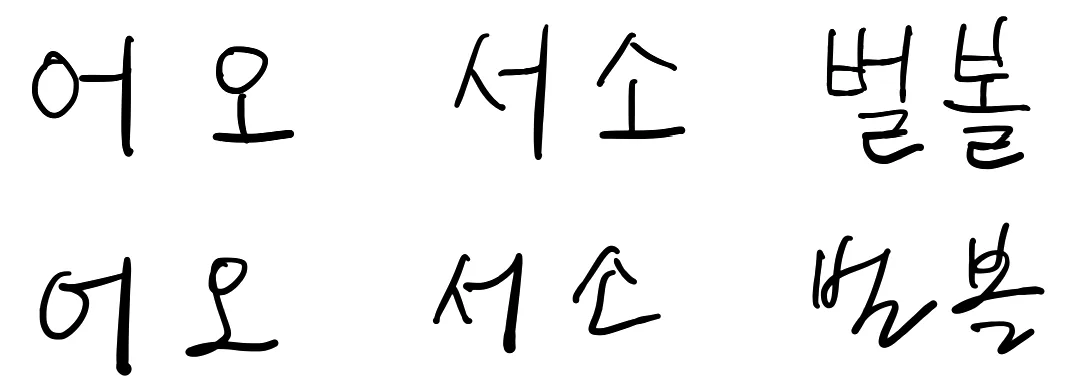
어 vs 오: The Vowel Sounds That Trip Up Learners
어 (eo) and 오 (o) are two distinct Korean vowel sounds that romanization spells confusingly similarly — hear and learn the difference.
▶ Short video✍️ Handwriting
언니 (Unnie) vs 누나 (Noona): What's the Difference?
Unnie (언니) and noona (누나) both mean older female; the speaker's gender decides: girls say 언니, boys say 누나. The one rule, the 2×2 chart with 오빠 and 형, a quiz.
▶ Short video
은/는 vs 이/가: What's the Difference?
은/는 (eun/neun) and 이/가 (i/ga) are Korea's two subject-area particles — confusing at first, but here's the simple way to tell them apart.
▶ Short video
기억하다 vs 기억나다: Two Ways to Remember
기억하다 (gieokhada) is actively remembering something; 기억나다 (gieoknada) is a memory coming back on its own — and the difference changes your particle.
▶ Short video
헐 vs 대박: Which Shock Word When?
헐 (heol) and 대박 (daebak) both react to surprising news in Korean, but they're not identical — the difference, with real examples and a quiz.
▶ Short video
입니다 vs 이에요: Which 'To Be' Should You Use?
입니다 (imnida) and 이에요 (ieyo) both mean 'to be' in Korean, but at different politeness levels — plus 예요 and the casual 야/이야.
▶ Short video
인싸 vs 아싸: Korean Slang for Social Types
Learn what 인싸 (inssa) and 아싸 (assa) mean — Korean slang for social butterfly vs loner, from English 'insider/outsider' — with real examples.
▶ Short video
이따가 vs 있다가: The Pair Even Koreans Mix Up
이따가 (ittaga) means 'a little later' while 있다가 (itdaga) means 'after staying somewhere' — a near-homophone pair even native Koreans misspell.
▶ Short video
찌개 vs 국 vs 탕: Korean Soup Words Compared
찌개, 국, and 탕 all translate to 'soup' or 'stew' in English, but they're different dishes with different roles at the table. Learn the difference.
▶ Short video
좋다 vs 좋아하다: To Be Good vs To Like
좋다 (jota) is an adjective ('to be good/pleasing') and 좋아하다 (joahada) is a verb ('to like') — swapping them flips your particles from 이/가 to 을/를.
▶ Short video
감사합니다 vs 고마워: Which 'Thank You' Should You Use?
감사합니다, 고마워요, or 고마워? A situation-by-situation guide to choosing the right Korean thank-you, with examples and a quiz.
▶ Short video
Korean Numbers: Native vs Sino-Korean, Explained
Korean has two full number systems — native Korean (하나, 둘, 셋) and Sino-Korean (일, 이, 삼). Learn which one to use when, with real examples.
▶ Short video
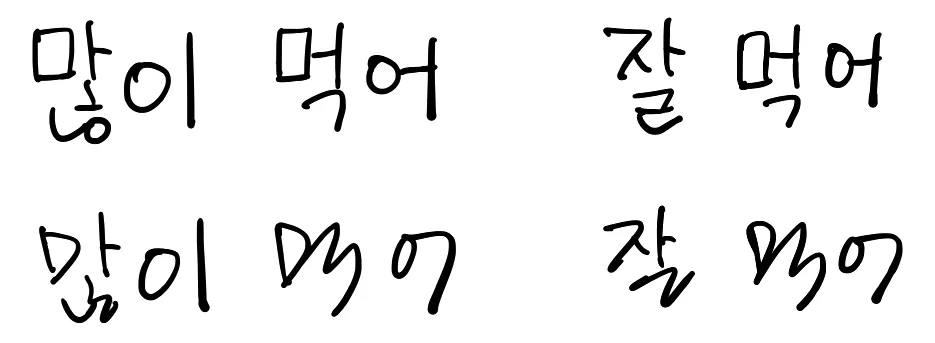
많이 먹어 vs 잘 먹어 vs 맛있게 먹어: Three Ways to Say "Enjoy Your Meal"
"Eat a lot," "eat well," "eat deliciously": three Korean phrases that all mean "enjoy your meal." Who says which, the polite 드세요 forms, and how to answer.
✍️ Handwriting
몰라요 vs 잘 모르겠어요: Two Ways to Say "I Don't Know"
몰라요 (mollayo) and 잘 모르겠어요 (jal moreugesseoyo) both mean 'I don't know,' but one can sound blunt and the other is the safer, softer default.
무슨 vs 어느 vs 어떤: Three Kinds of "What/Which"
무슨 (museun, 'what kind'), 어느 (eoneu, 'which of a set') and 어떤 (eotteon, 'what sort') are Korea's three question words for English 'what/which.'
▶ Short video
나 vs 저: Korean's Two Words for "I"
나 (na) and 저 (jeo) both mean 'I' in Korean — but 나 is casual banmal and 저 is the humble, polite form. Includes their irregular subject-marker forms.
▶ Short video
네 (Ne) vs 응 (Eung): How to Say Yes in Korean
네 (ne) and 응 (eung) both mean yes — but one is polite and one is casual. Learn which to use, plus 예 (ye) and why 네 doesn't always mean 'yes'.
▶ Short video
오빠 (Oppa) vs 형 (Hyung): What's the Difference?
오빠 (oppa) and 형 (hyung) both mean 'older male' — the speaker's gender decides which one to use. Learn the rule, the exceptions, and test yourself.
▶ Short video
사랑해 vs 좋아해: I Love You vs I Like You
사랑해 ('I love you') and 좋아해 ('I like you') both express affection in Korean, but at very different intensity levels.
▶ Short video