Editorial Policy
How our content is made
Every page on Dive in Korean is made by Jun and Jin, native Korean speakers who do the work together — they don't split it into “writer” and “reviewer.” Each page's byline shows them as its authors — see who we are. Here is what goes into a page before it is published.
- Choosing what to cover. Topics come from what learners actually look up and ask about: the words people search for, the phrases they hear in dramas and songs, and the moments that confuse visitors to Korea.
- Writing down how we really speak. For each word, Jun and Jin note how they use it themselves — who they would say it to, what they would never say, and how everyday speech differs from the textbook. Those notes shape the explanation and the example sentences.
- Going out with a camera. Many pages show photos Jun and Jin took themselves around Seoul — shop signs, menus, bus stops, taxis, markets and palaces — so you see the Korean you will actually meet. Faces, license plates and phone numbers are blurred before anything is published.
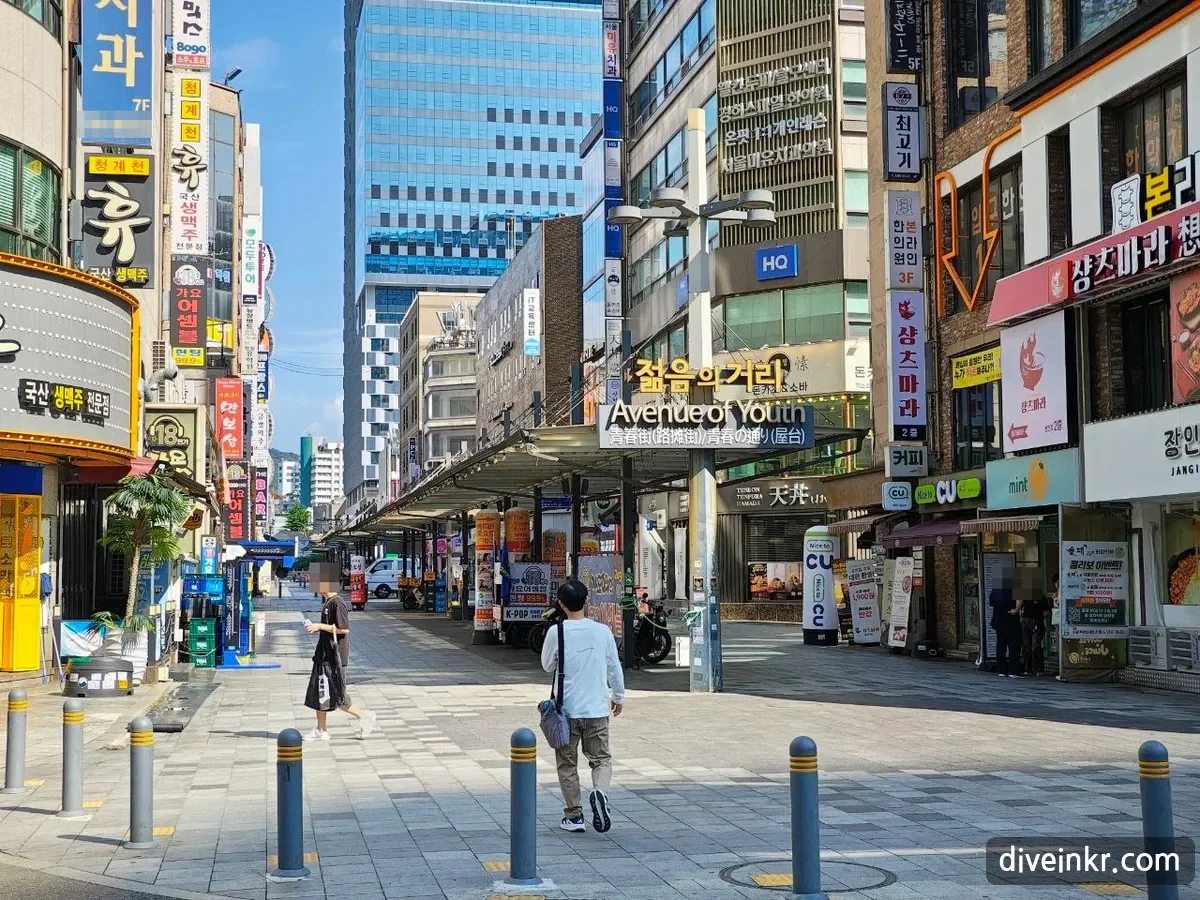
One of our street photos as published on Reading Korean street signs — passers-by's faces and a shop phone number are blurred, the signs stay readable. - Writing Korean by hand. Handwritten examples and our free printable charts are written by hand, because real Hangul often looks different from a font.
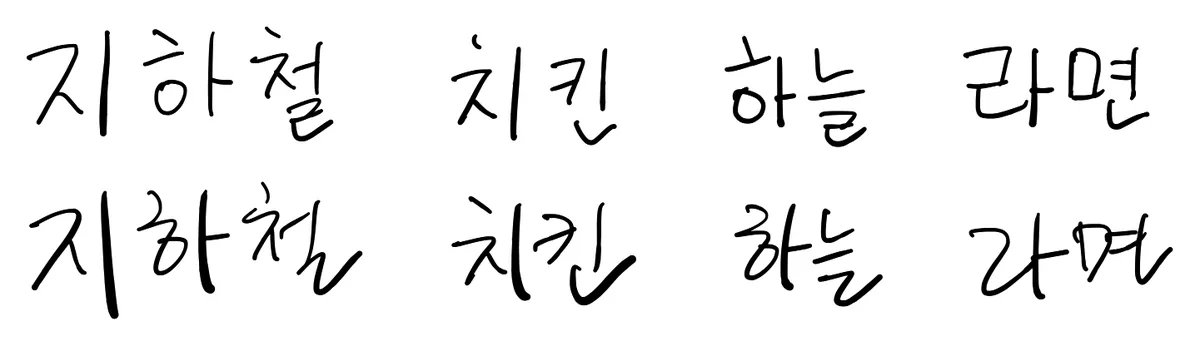
The same words written carefully and at everyday speed, from Korean handwriting vs fonts. - Checking every example sentence. Jun and Jin read each example line by line and fix anything that sounds unnatural, too stiff or out of date — and they add notes on how people really talk, such as dropping particles or relaxing honorifics in casual speech.
- Confirming the facts. Dates, fares, laws and dictionary definitions are checked against official sources before they go on a page (see below).
- Making short videos. For many words they also make short videos, so you can hear and see the word in use.
- Coming back to it. Pages are revisited as we learn what readers need: new sections, new photos, updated date tables, and corrections.
What we check before publishing
- Accuracy — is the explanation factually correct?
- Naturalness — are the example sentences real, natural Korean?
- Context — do we explain who says it, to whom, and in what situation?
- Cultural accuracy — no exaggerated or stereotyped claims about Korean culture.
- Clarity — can a complete beginner follow the explanation?
Use of AI
Jun and Jin choose every topic, bring the native-speaker judgment — what sounds natural, who says it to whom, and what we've actually seen and heard in Korea — and review and approve every page before it goes live. Along the way, we use AI as an assistant: to help research and organize material, to help with editing, to check pages for gaps and inconsistencies, and for the technical work of running the website. Nothing AI produces is published as-is, and the native-speaker details on this site come from Jun and Jin, not from AI.
Facts and sources
Whether a phrase sounds natural, and who would say it to whom, is decided by native speakers. Checkable facts — fares, dates, laws, statistics, dictionary definitions — are confirmed against official sources (Korean government and public institutions, the National Institute of Korean Language). Facts we can't confirm, or where sources disagree, are left out. Where a page cites a source, it is linked in a short “Sources” list next to the facts it supports.
Corrections
If you find an error, please tell us via the contact page. Corrections are prioritized over new content, and each page shows its last-updated date.